
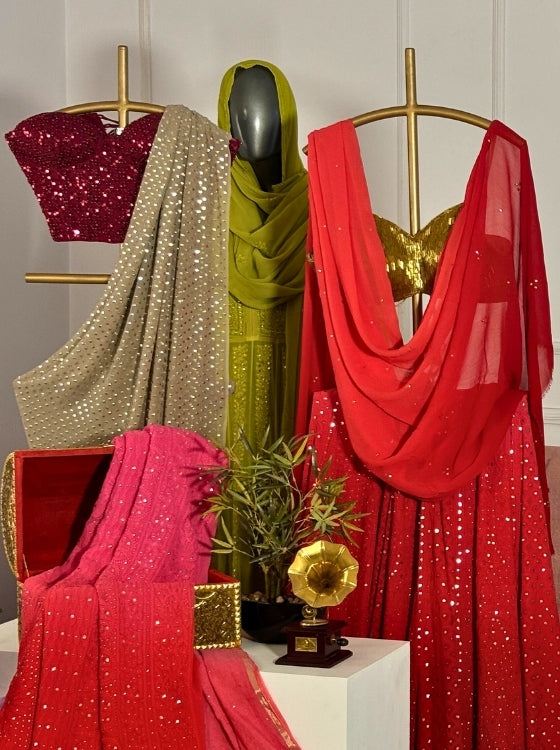
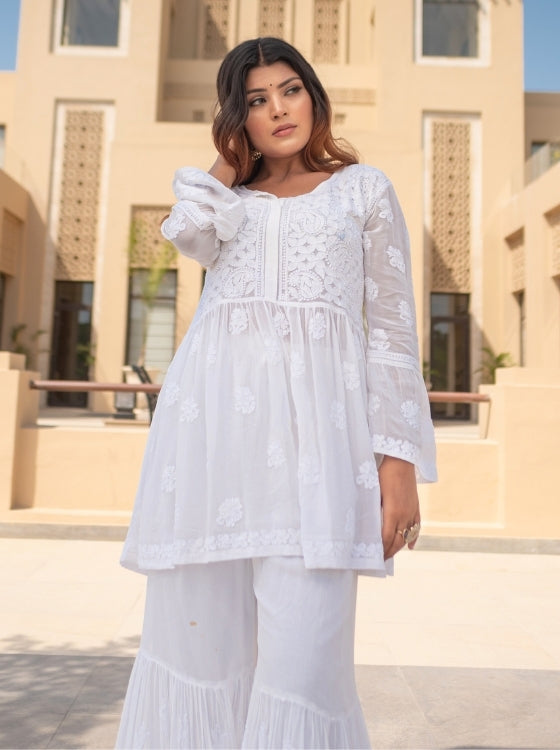






Mukaish work, often called Kaamdani, is the art of adding delicate metallic work to fabric using fine hand-twisted wire. Originating from Lucknow, this traditional technique was developed to bring a gentle glow to Chikankari without overpowering its intricate embroidery.
In this blog, we take a deep dive into the heritage of Mukaish work, understand why these tiny hand-placed dots are considered “gold on fabric,” and see how Mukaish continues to make Chikankari shine in modern wardrobes at Thechikanlabel.com.
Table of Contents
-
What Is Mukaish Work?
-
The Origins of Mukaish & Kaamdani
-
Why Mukaish Is Called “Gold on Fabric”
-
Mukaish Work & Chikankari: A Perfect Union
-
Types of Mukaish (Fardi, Kaamdani & More)
-
How Authentic Mukaish Is Made by Hand
-
Styling Chikankari with Mukaish Work
-
Caring for Mukaish-Embellished Chikankari
-
Why Thechikanlabel.com Celebrates Mukaish
1. What Is Mukaish Work?

Mukaish work is a traditional metal embroidery technique that uses fine metallic dots to create a soft, luminous effect on fabric. Often referred to as Kaamdani, this art involves hand-twisting thin metal wires (traditionally silver or gold-coated) into delicate dots that catch light with every movement.
Unlike heavy embellishment, Mukaish is subtle — it shines without overpowering, making it the perfect companion to Chikankari.
2. The Origins of Mukaish & Kaamdani

Mukaish embroidery traces its roots to Lucknow, flourishing under Mughal patronage alongside Chikankari. Royal ateliers used Mukaish to add understated glamour to court garments, evening angarkhas, and festive attire.
Historically, real silver wire was used — earning Mukaish its reputation as “embroidery that glows like gold.”
3. Why Mukaish Is Called “Gold on Fabric”

Mukaish doesn’t sparkle loudly — it glimmers softly, much like candlelight.
What Makes It Special:
-
Reflects light with movement
-
Done completely by hand
-
Perfect for evening and festive wear
-
Enhances embroidery without hiding it
On Chikankari, Mukaish acts like jewellery for fabric — minimal yet luxurious.
4. Mukaish Work & Chikankari: A Perfect Union

Chikankari is known for texture and grace; Mukaish adds dimension and glow. Together, they create garments that feel festive yet breathable — ideal for Indian celebrations.
This pairing is especially loved for:
-
White & ivory Chikankari
-
Festive kurta sets
-
Evening ethnic wear
-
Wedding guest outfits
At Thechikanlabel.com, Mukaish is used sparingly and thoughtfully — never overpowering the hand embroidery beneath.
🛍️ Product Link Placeholder:[Shop Chikankari with Mukaish Work – THECHIKANLABEL.COM]
5. Types of Mukaish Work You Should Know

✨ Kaamdani
-
Dense metal dot clusters
-
Rich, festive appearance
✨ Fardi
-
Evenly spaced tiny dots
-
Minimal, elegant shimmer
✨ Badla
-
Flattened metal wire technique
-
Slightly bolder shine
Authentic pieces often combine Chikankari stitches with Fardi or Kaamdani Mukaish for balance.
6. How Authentic Mukaish Is Made by Hand

True Mukaish is never machine-made.
The Handmade Process:
-
Fabric is stretched tightly on a frame
-
Fine metallic wire is inserted using a needle
-
Wire is twisted and secured into tiny dots
-
Excess metal is clipped carefully
This painstaking process takes hours or days, depending on density — which is why genuine Mukaish holds such value.
7. How to Style Chikankari with Mukaish

Festive Daywear
-
White Chikankari kurta with subtle Fardi Mukaish
-
Straight pants & juttis
-
Pearl or silver jewellery
Evening Elegance
-
Ivory Chikankari kurta set with Kaamdani work
-
Metallic heels
-
Soft glam makeup
Wedding Guest Look
-
Chikankari with Mukaish + dupatta
-
Statement earrings
-
Hair in a low bun
📸 Instagram Styling Reference Placeholder:[Insert Mukaish styling reel – @thechikanlabel]
8. Caring for Mukaish-Embellished Chikankari

To preserve the shine:
-
Dry clean only
-
Store flat, wrapped in soft cloth
-
Avoid folding on heavy Mukaish areas
-
Keep away from moisture
Proper care ensures your Mukaish continues to glow for years.
9. Why Thechikanlabel.com Celebrates Mukaish

Our approach to Mukaish is rooted in restraint and respect.
-
✔ Hand-done Mukaish only
-
✔ Authentic Chikankari base
-
✔ Artisan-led craftsmanship from Lucknow
-
✔ Modern silhouettes with heritage detailing
Each piece is designed to shine quietly, just like the women who wear it.
🎥 Video Placeholder:[Behind the Craft: Mukaish artisans of Lucknow]
Final Thoughts: When Craft Becomes Light
Mukaish is not about sparkle — it’s about subtle radiance. In a world of excess, these tiny hand-placed dots remind us that true luxury lies in detail, patience, and heritage.
When paired with Chikankari, Mukaish doesn’t just decorate fabric — it brings it to life.


