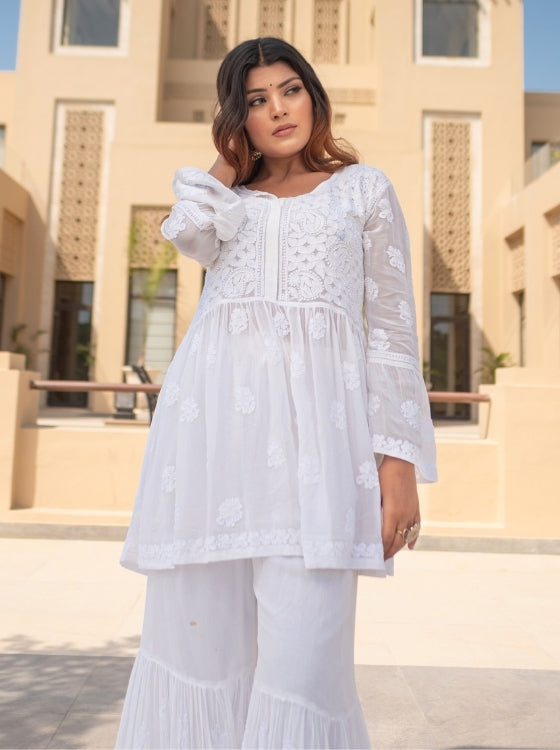
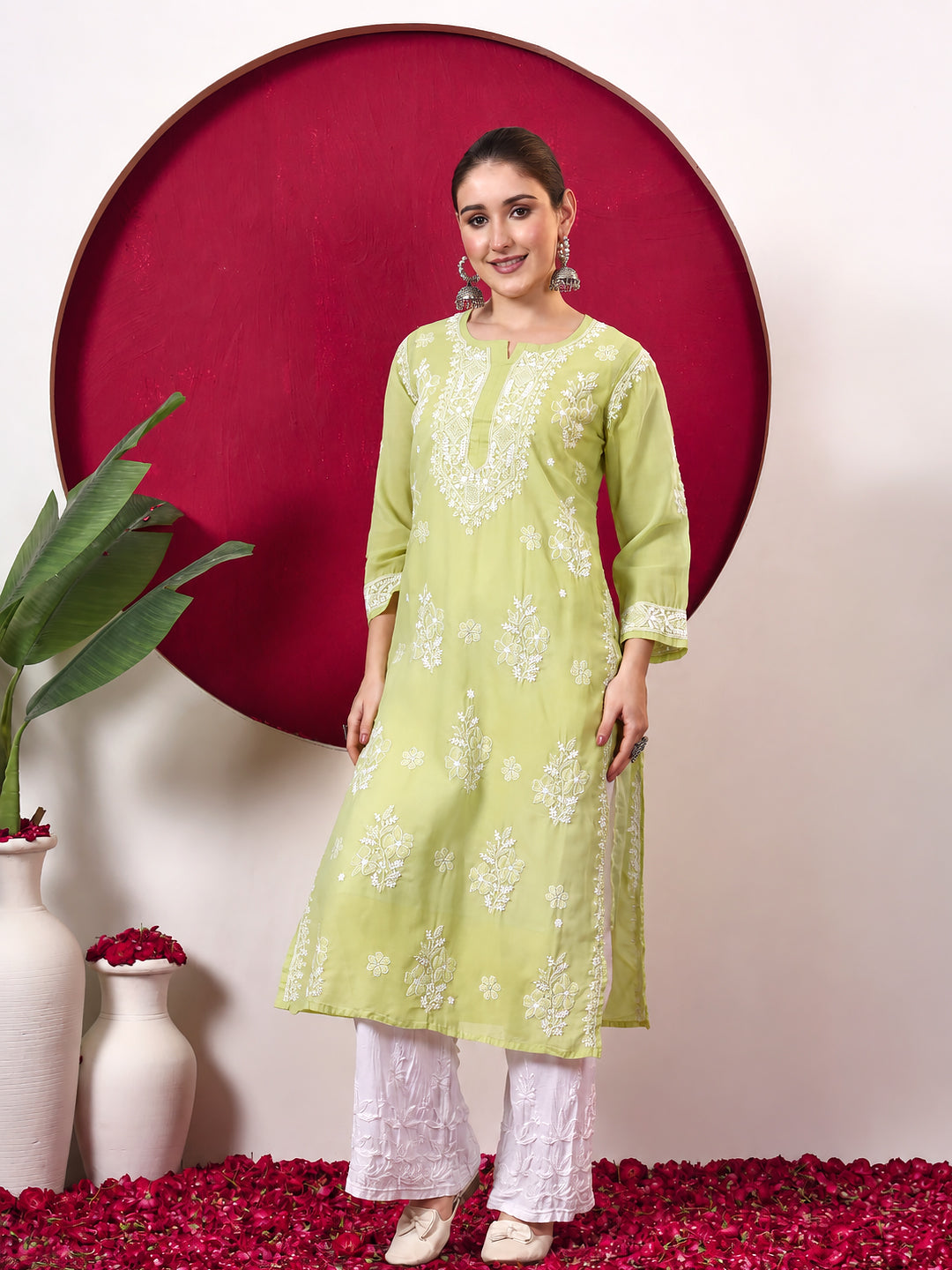
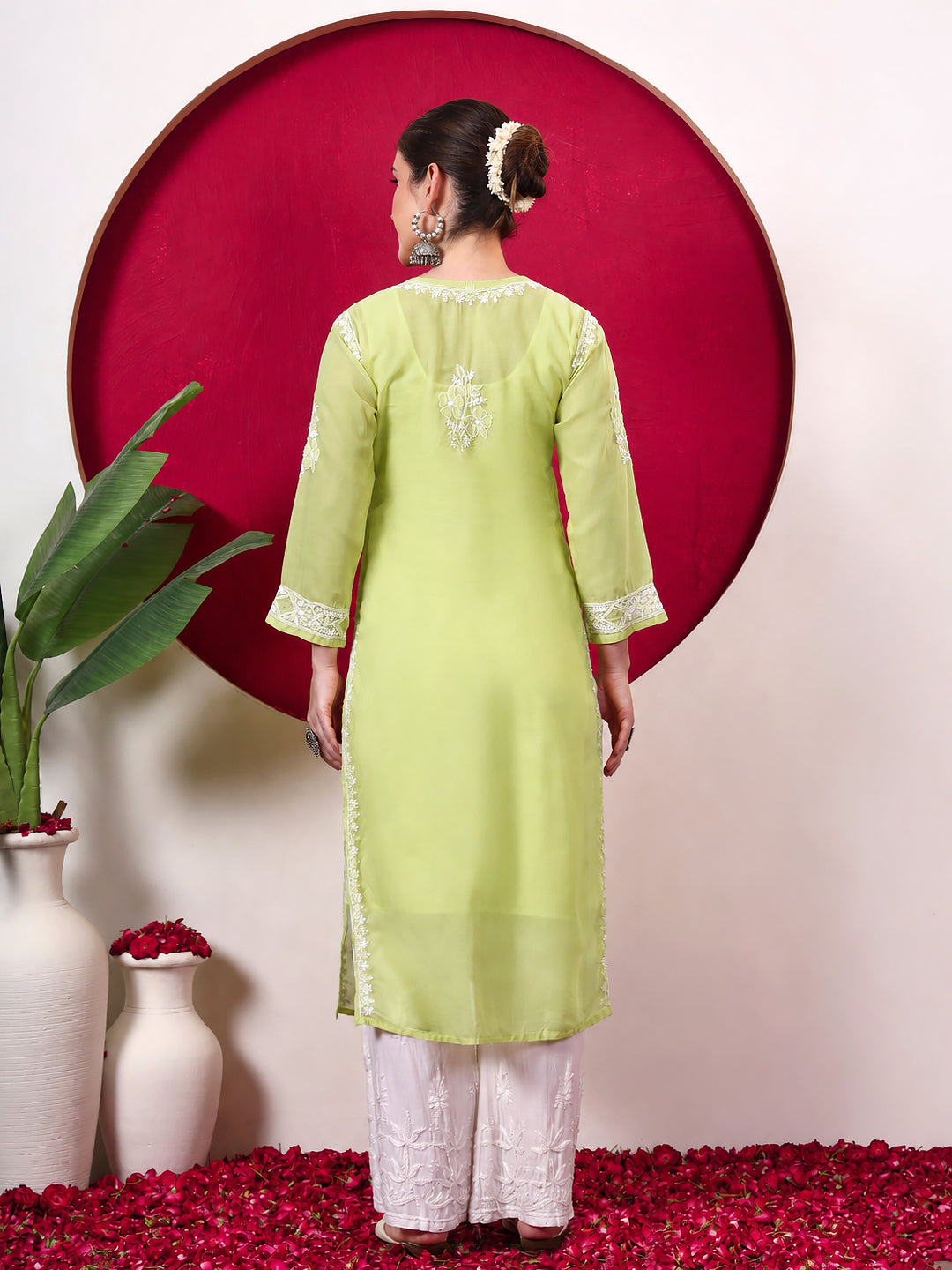
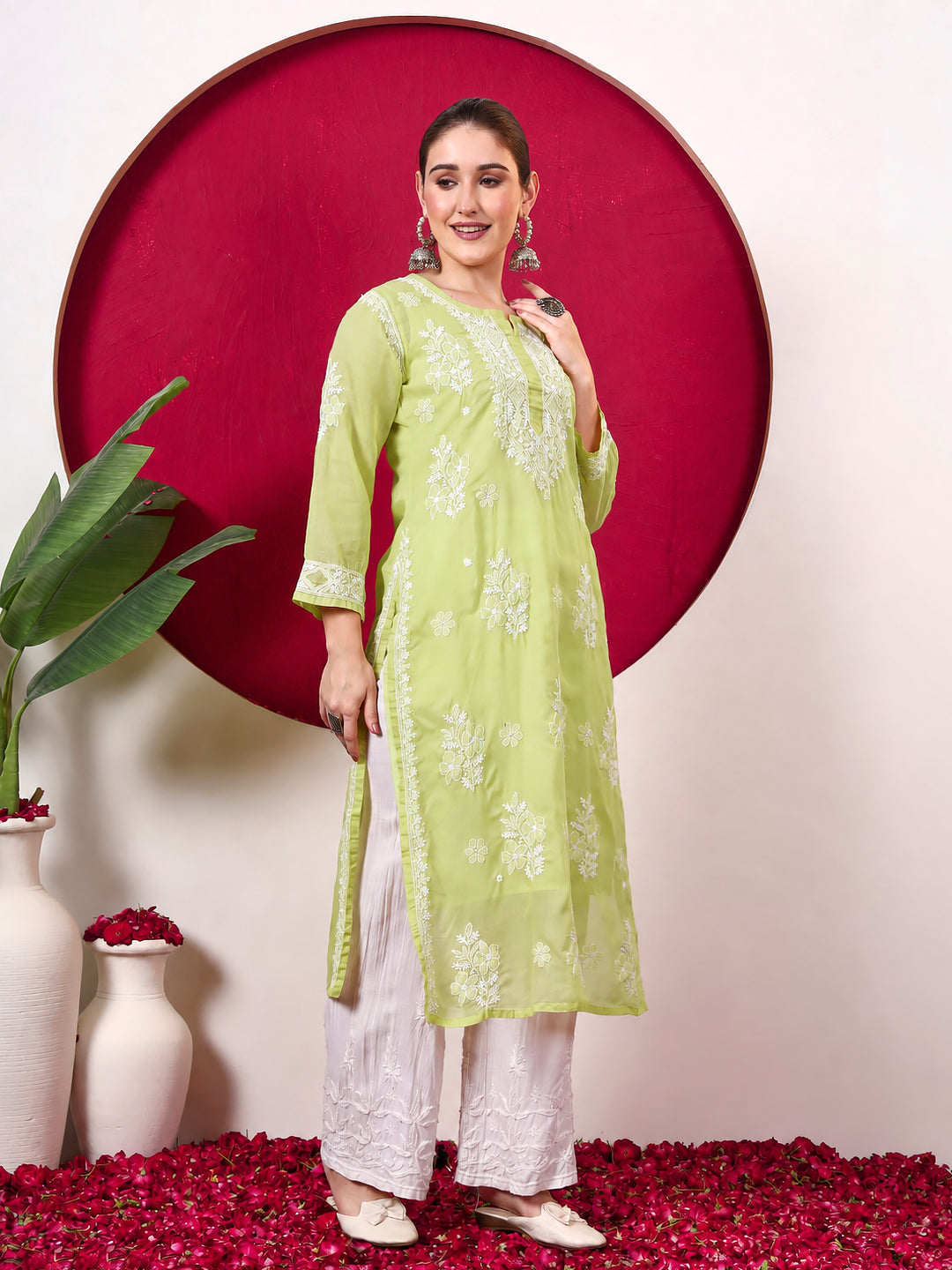
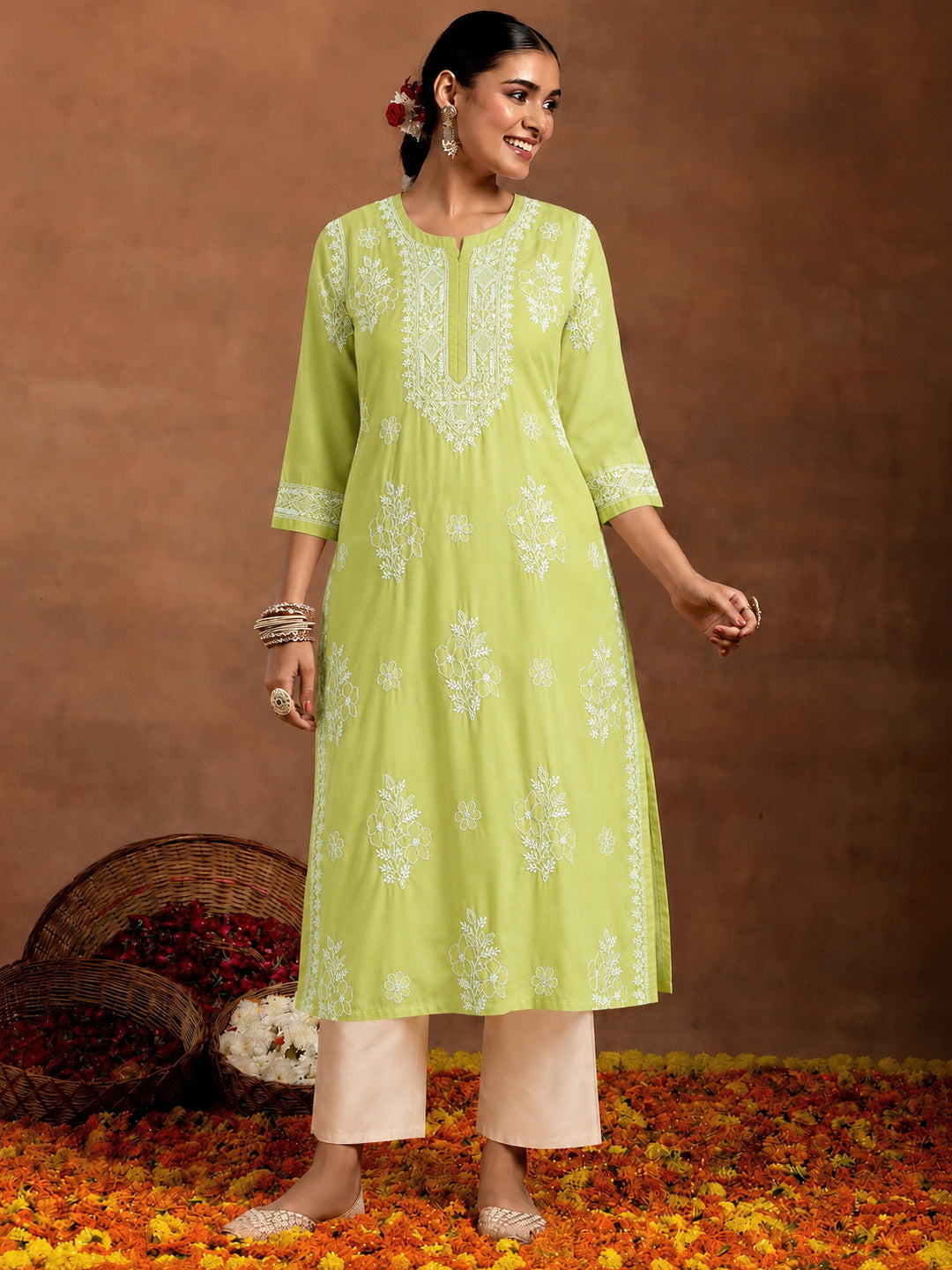
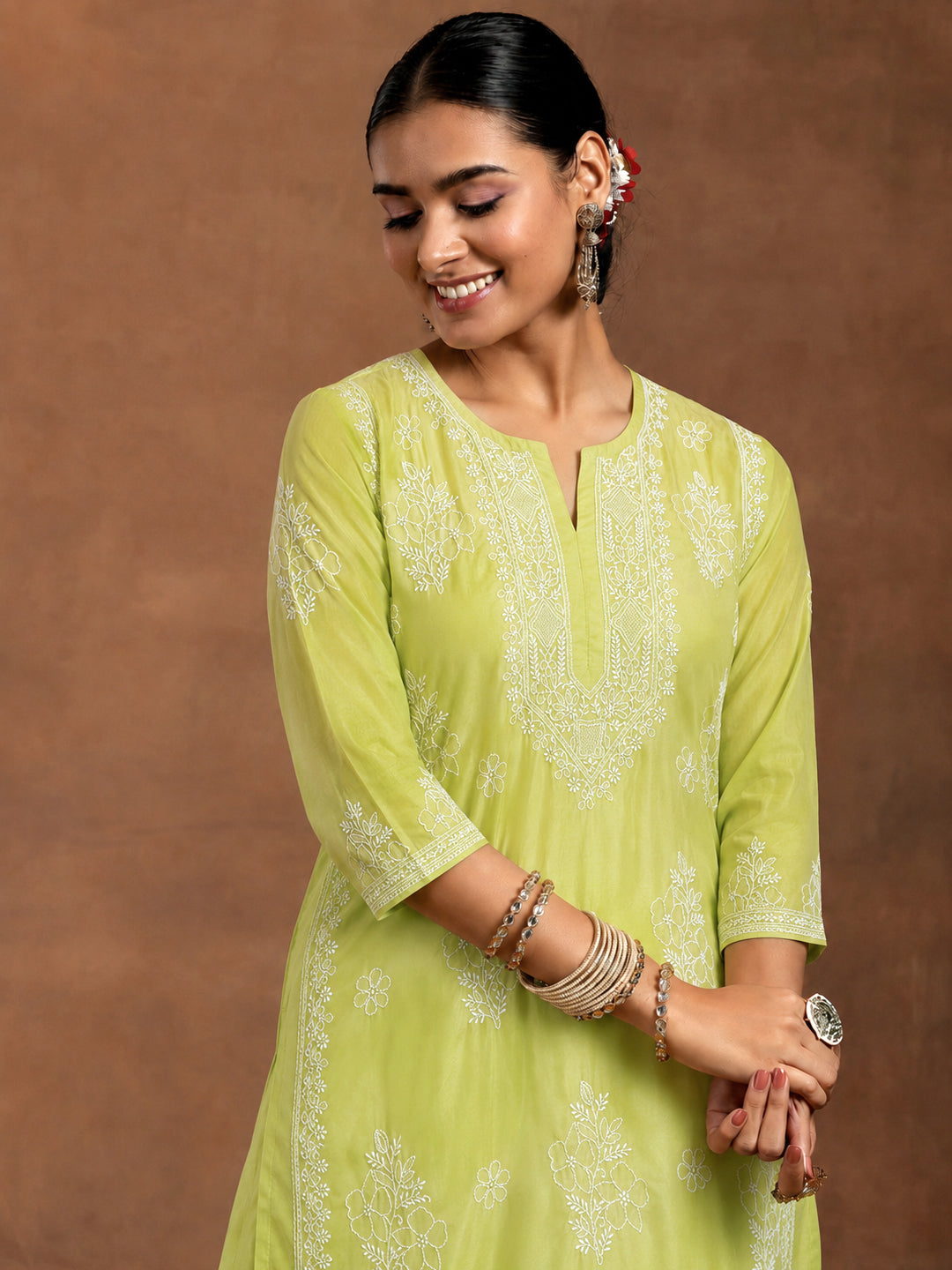
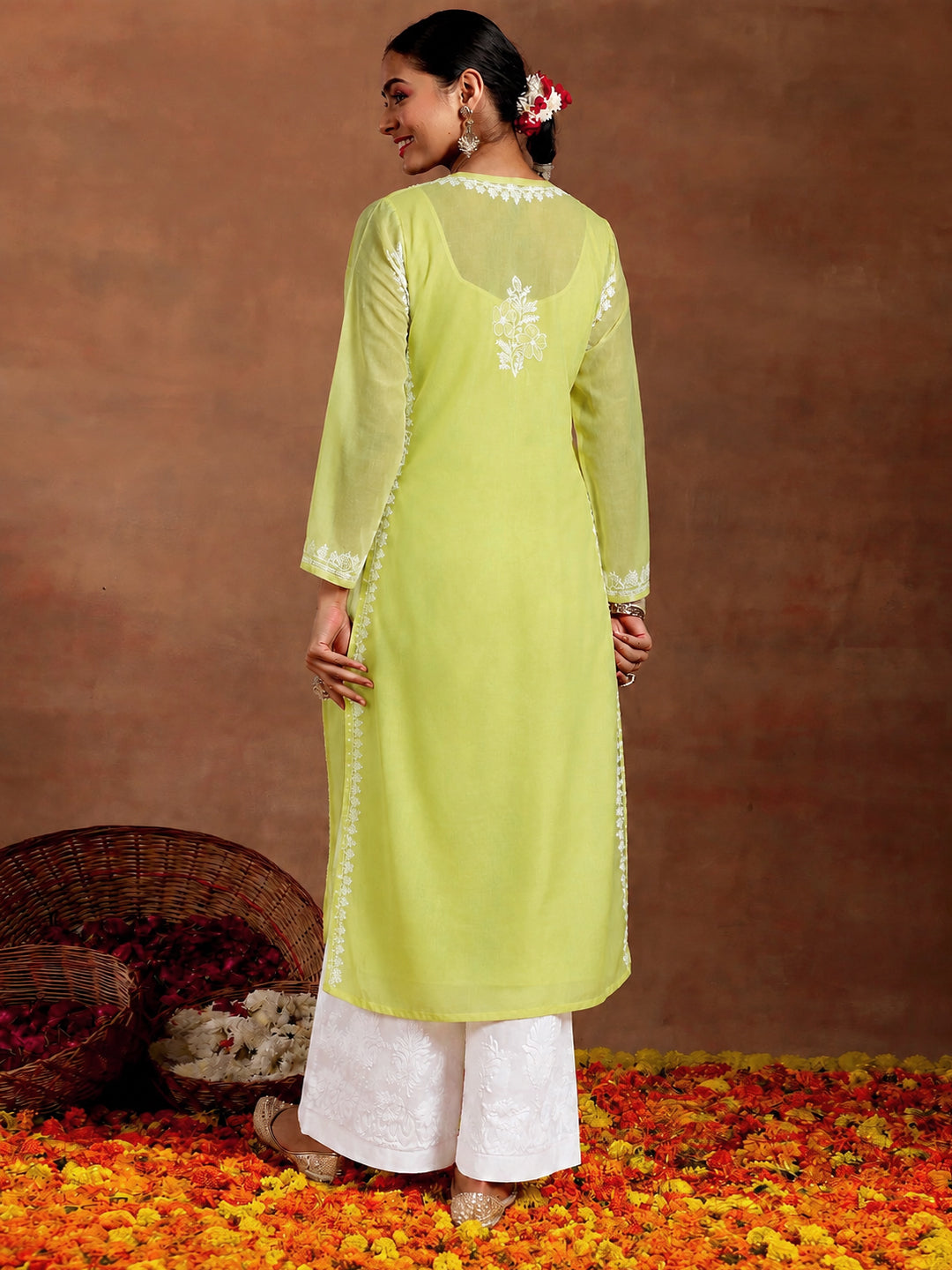
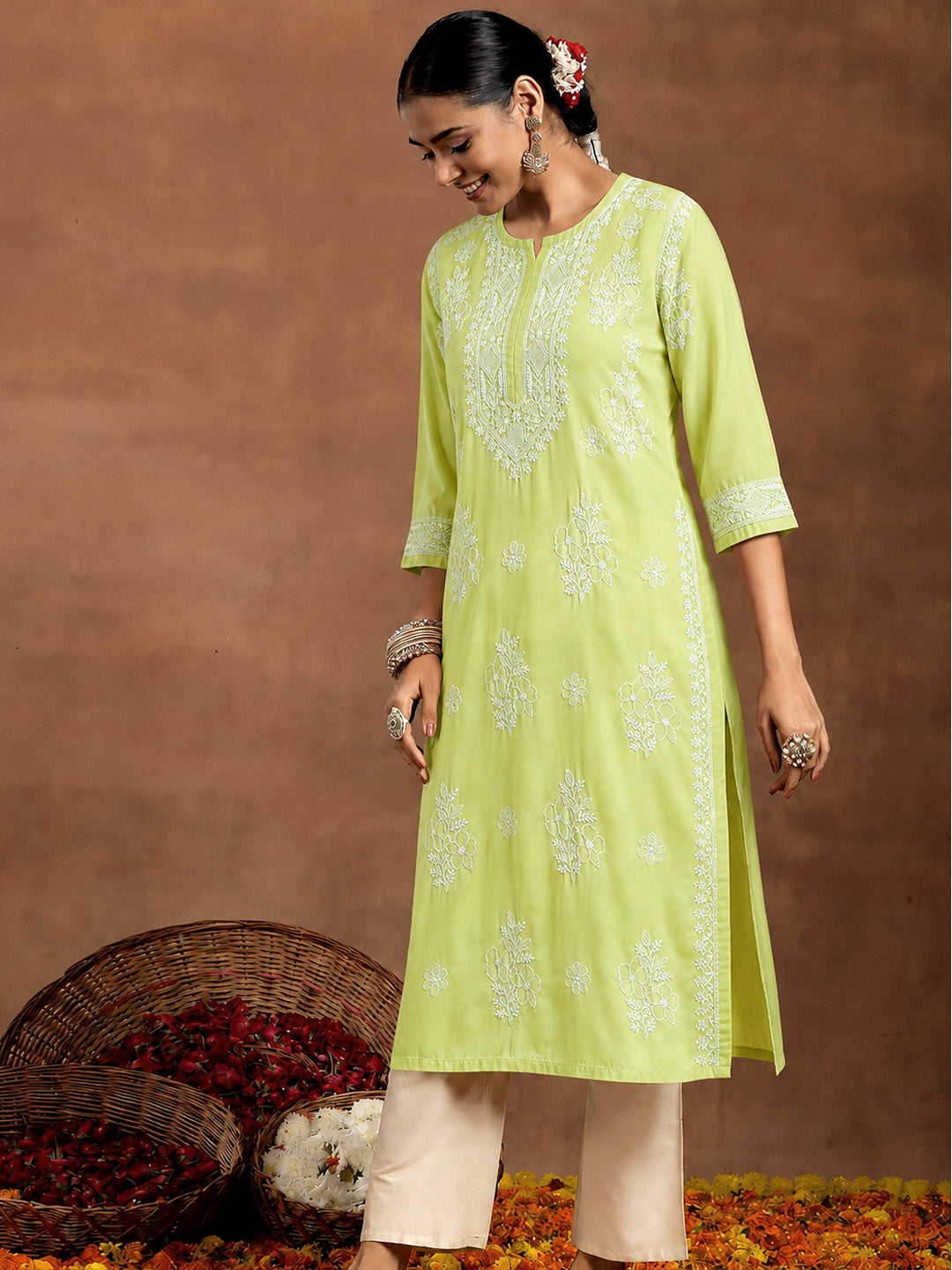
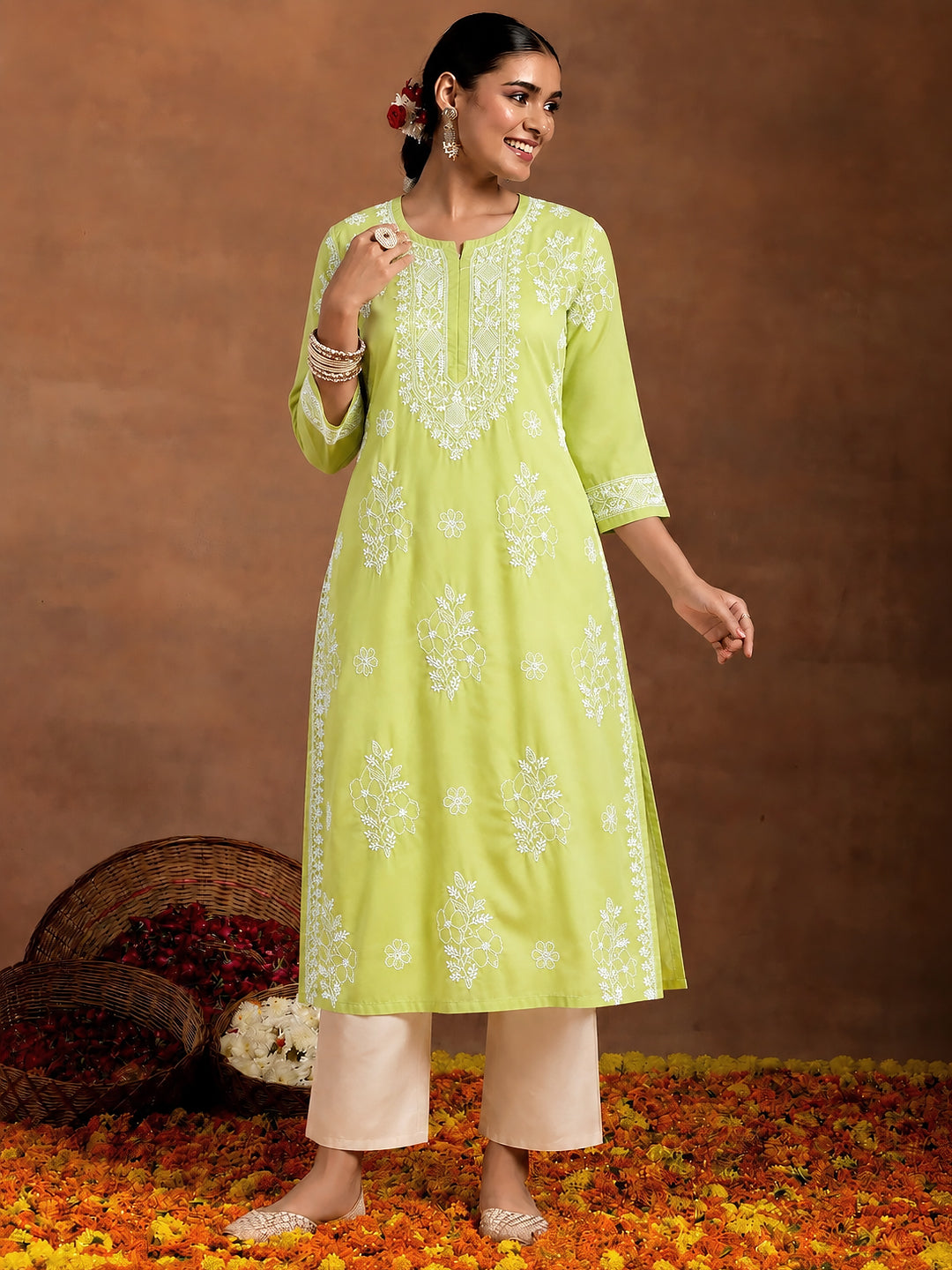
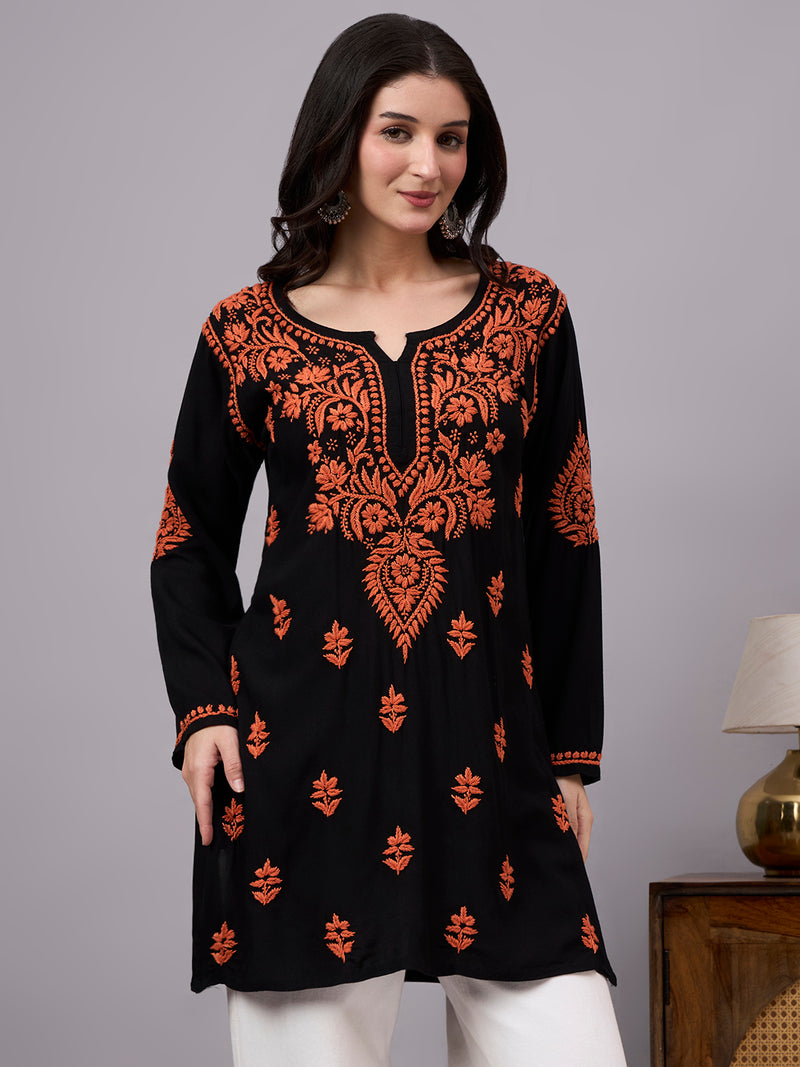
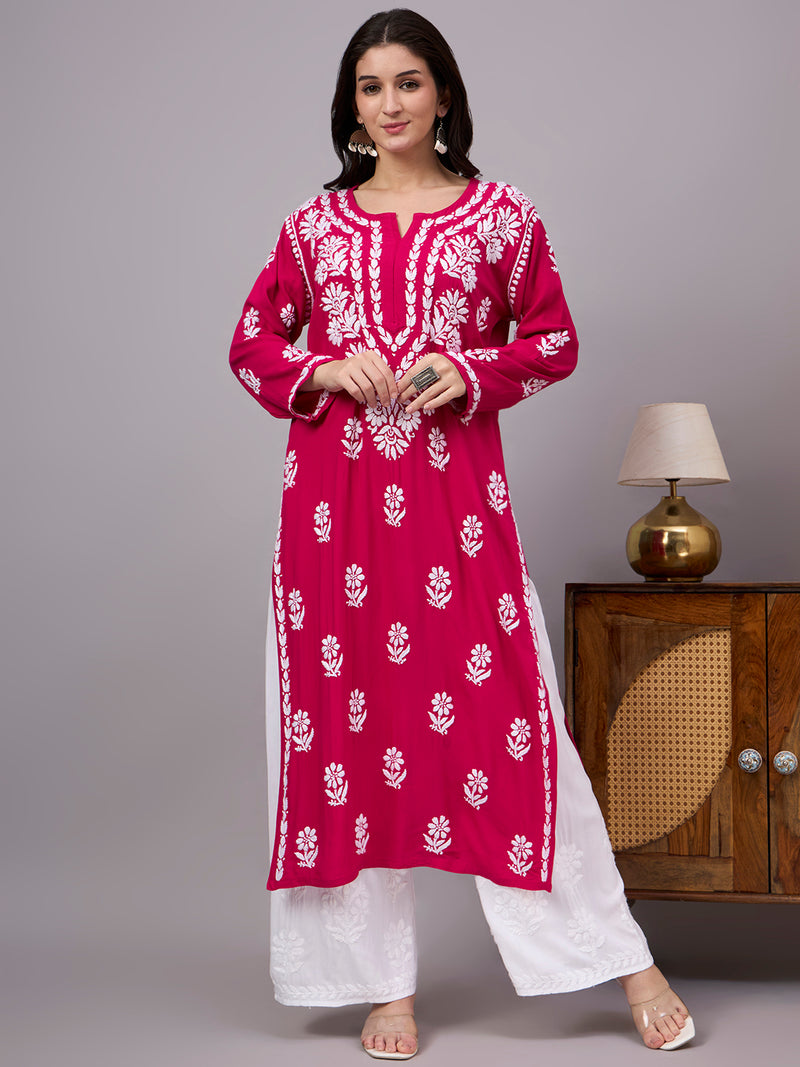
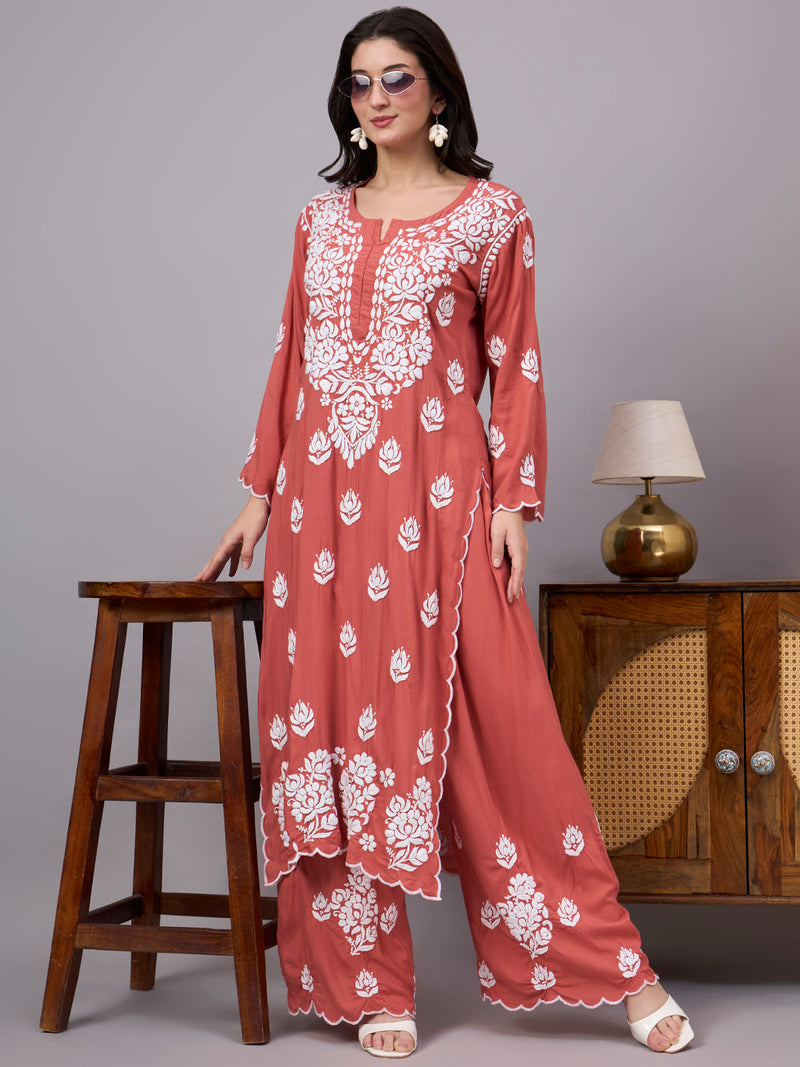
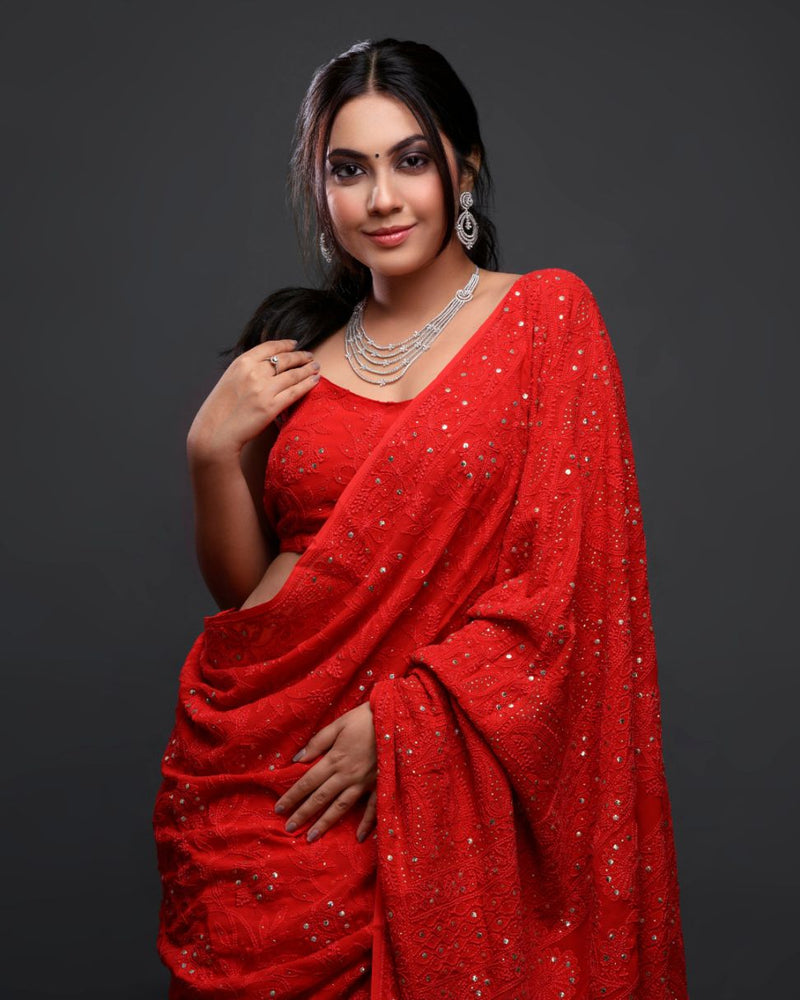
What is Chikankari embroidery? Chikankari is a textile-embellishment technique in which a design is created with needle and thread on fabric. Lucknow is especially associated with this craft. Its visual identity includes delicate floral and leafy motifs, fine outlines, textured fillings and, in some styles, translucent shadow work. Traditional white-on-white embroidery remains well known, but contemporary pieces also feature coloured threads, different fabrics and updated silhouettes.
How is Lucknowi Chikankari made? A design is first planned and marked onto the fabric, often with washable block-printing methods known as chapai. An embroiderer then works the chosen stitches by hand. Washing and finishing remove the guide marks and prepare the garment. The order of production can vary by workshop and garment. When shopping, check the individual product details rather than assuming every Chikankari-inspired item uses the same process or embroidery method.
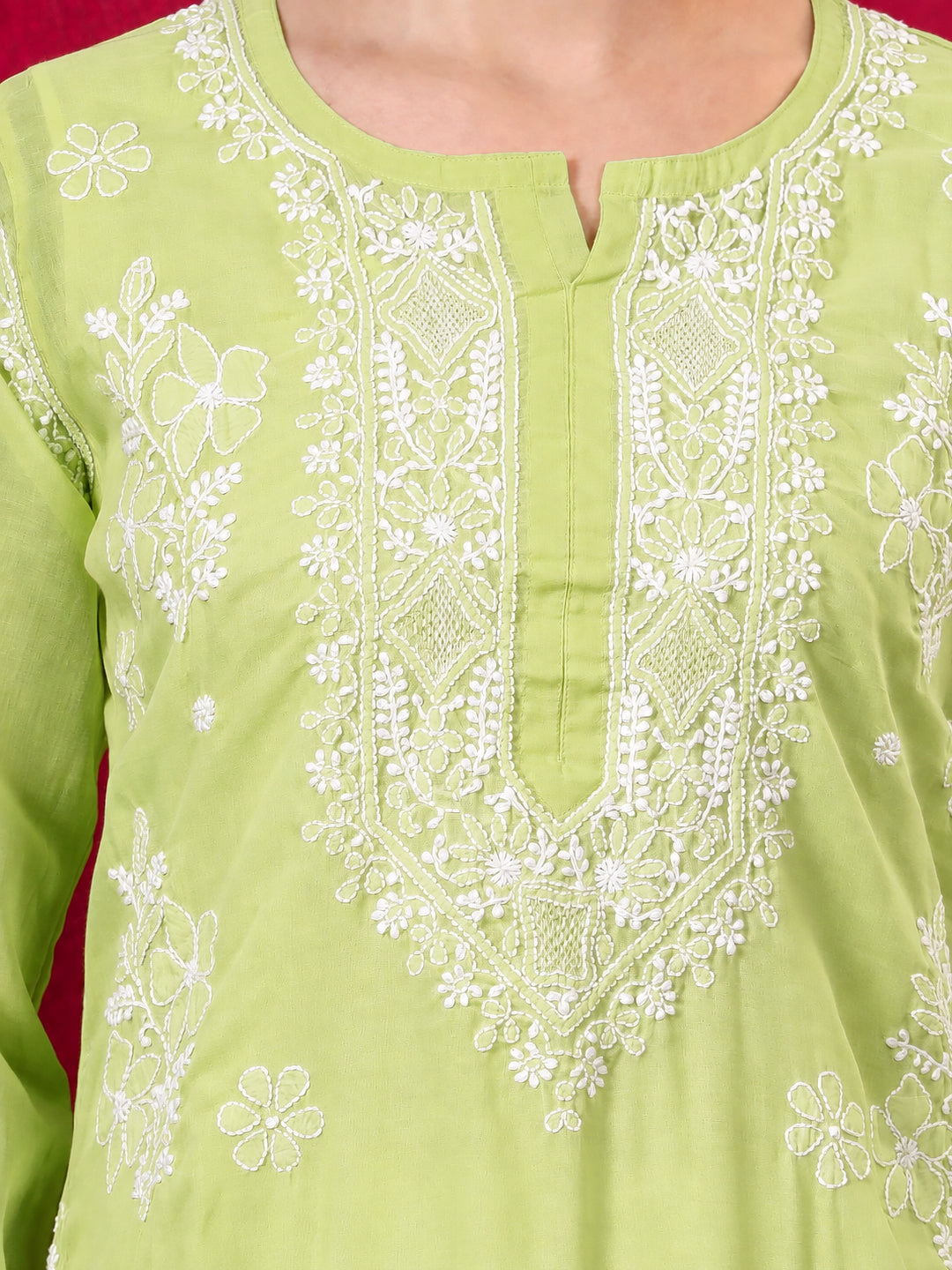
Which Chikankari stitches matter? Tepchi is a running stitch often used for outlines. Bakhiya is associated with the soft, layered appearance of shadow work. Phanda forms small raised knots, often seen in floral centres; murri creates another characteristic textured knot. Jaali work can create an open, mesh-like effect within the fabric. The combination and density of stitches can change how an embroidered garment looks and feels.
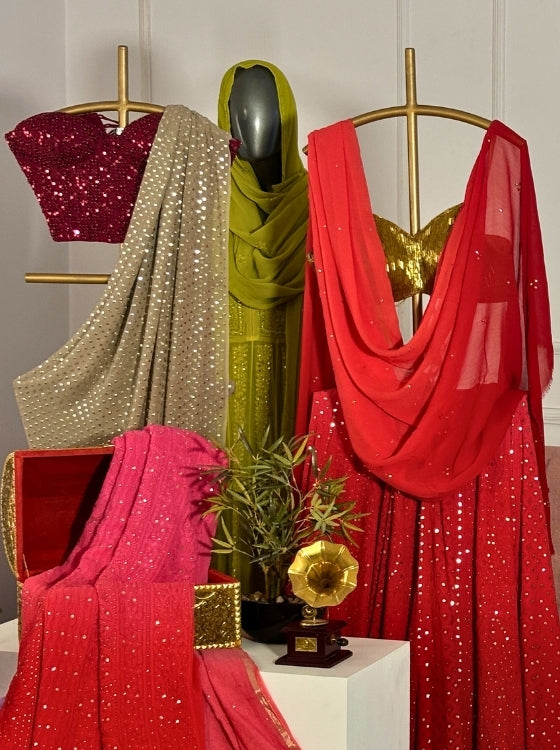
What fabrics are used for Chikankari clothing? Chikankari is found on several fabrics, including cotton, mulmul (fine cotton), modal, rayon, georgette and other suitable textiles. Fabric affects drape, sheerness, comfort, care and how the embroidery sits on the garment. For warm-weather or everyday dressing, check the fabric composition and lining or inner details before ordering. For occasion wear, compare the silhouette, surface embellishments and product photographs as well as the embroidery.
How do you recognise good Chikankari work? Look closely at the stitch definition, motif placement, thread finish and consistency of the overall garment. Hand embroidery can have small variations; variation alone does not prove authenticity, and perfect-looking stitching alone does not prove machine production. Ask for close-up photographs when the embroidery method is important to your purchase. Read the product description for any stated handwork, fabric, embellishments and garment inclusions. Our existing guide to identifying Chikankari work explains additional checks.
How should you choose a Chikankari outfit online? Match the style to its use: a Chikankari kurti or short kurta for easy styling; a Chikankari kurta set when you want a coordinated look; a Chikankari saree for draped occasion dressing; or a Chikankari dupatta to style an existing outfit. Then check measurements, fit, transparency, the size chart, care instructions, availability and shipping information on that specific product page.
Why is Lucknow important to Chikankari? The craft is closely linked to Lucknow's textile history and artisan communities. Knowledge of embroidery patterns and stitch techniques has been passed through generations, while contemporary makers continue to adapt Chikankari to modern clothing. Its early history has several competing accounts, so legends about a single inventor should not be treated as established fact. For historical background, read our History of Chikankari resource.
Explore the craft and find your fit. Knowing how Chikankari is made can help you assess details that matter when buying: embroidery quality, fabric, silhouette and construction. Browse women's Chikankari clothing and use the individual product listings to compare materials, sizing, images and current availability.