







What Is Chikankari?
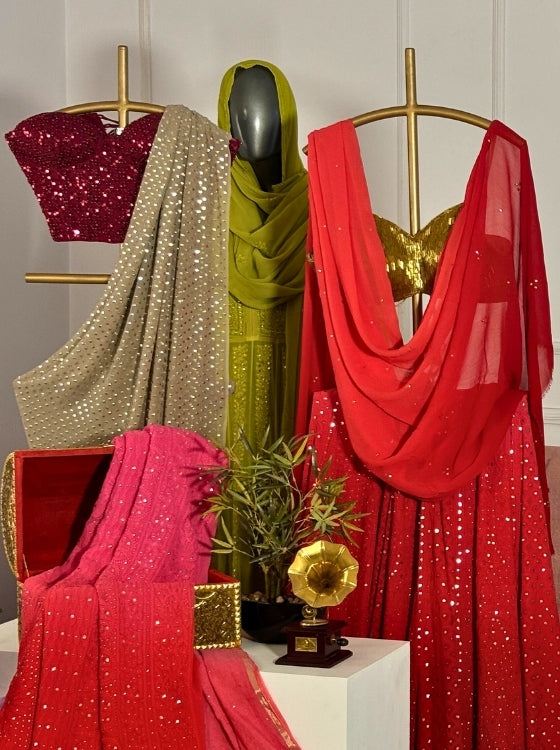
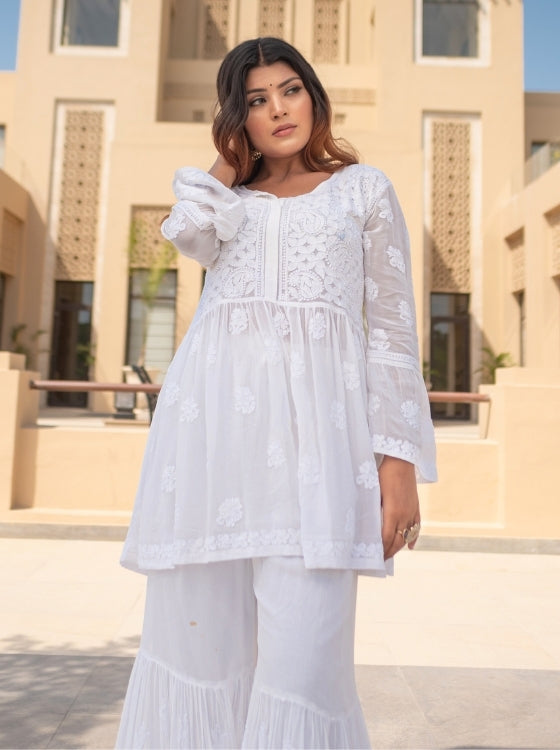
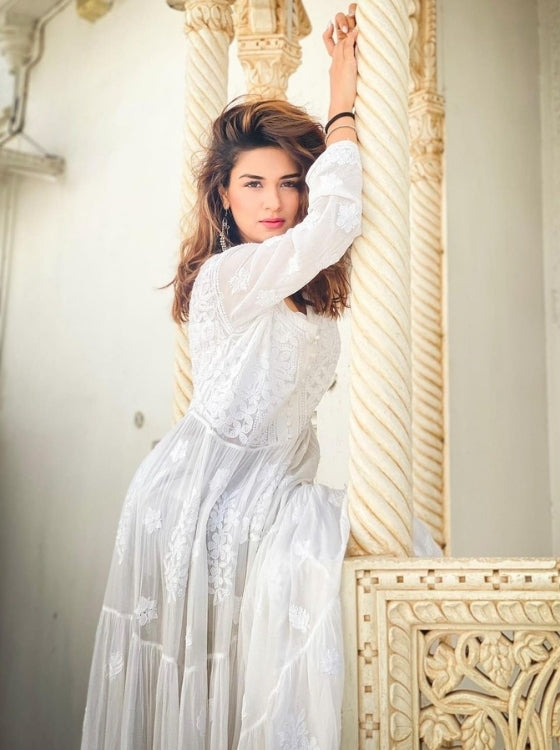
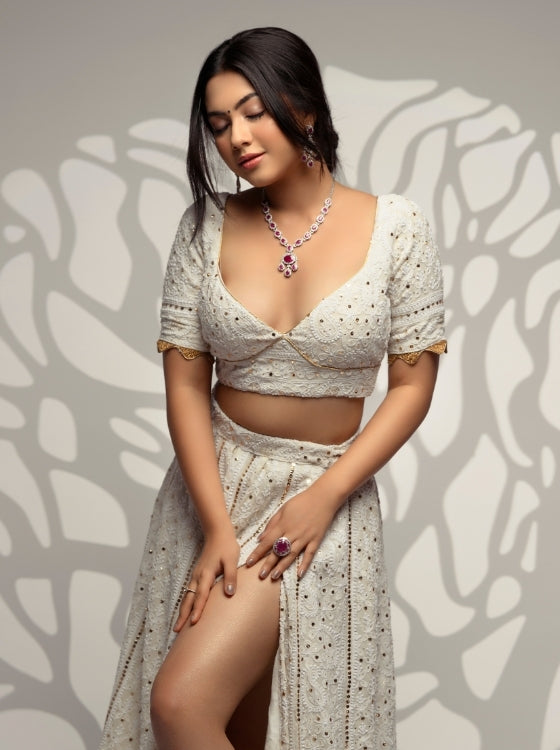
Chikankari is one of India's oldest and most refined hand embroidery traditions, originating from the city of Lucknow in Uttar Pradesh. The craft involves delicately embroidering fine fabric — traditionally white cotton muslin — with white thread, using a repertoire of over 32 distinct hand stitches. The result is an interplay of texture, shadow, and light that no machine can replicate.
The name "Chikankari" is believed to derive from the Persian word chikan, meaning "delicate needlework." Others trace it to the Bengali word chikan, referring to fine embroidered cloth. Either way, the craft represents a convergence of Persian artistry, Mughal patronage, and the extraordinary skill of Lucknow's artisan community.
Today, Chikankari kurtas, sarees, kurta sets, and dupattas are worn by women across India and the world — at weddings, festivals, offices, and everyday occasions. But the story of how this craft was born, nearly lost, and lovingly preserved is as intricate as the stitches themselves.
Origins: The Mughal Empress Who Started It All
The most widely accepted origin of Chikankari traces back to the 17th century Mughal court and the legendary Empress Nur Jahan — wife of Emperor Jahangir and one of the most powerful women in Mughal history.
Nur Jahan is credited with introducing this delicate embroidery style to India, having encountered similar needlework traditions in Persia. She is said to have brought Persian embroiderers to the Mughal court and encouraged Indian artisans to learn and adapt the craft. Under her patronage, Chikankari flourished as an art of the royal household — produced for the exclusive use of Mughal royalty on their finest muslin garments.
"In Nur Jahan's hands, embroidery became a language of power — each stitch a whisper of Persian elegance translated into the Indian idiom."
Some historians, however, argue that the roots of Chikankari go deeper than the Mughal era. Ancient Indian texts, including references in the works of Megasthenes (the Greek ambassador to the Mauryan court in the 4th century BCE), describe embroidered Indian cloth traded across the ancient world. These early forms of embellished fabric may well be ancestral to what we know as Chikankari today.
What is certain is that the Mughal period — particularly the 17th and 18th centuries — was when Chikankari took the form we recognise today: white-on-white thread work, rooted in an aesthetic of refined restraint that valued skill over colour.
The Nawabi Era: Lucknow's Golden Age of Chikankari
When Mughal power began to wane in the early 18th century, the cultural torch passed to the Nawabs of Awadh — the regional rulers who made Lucknow their capital and transformed it into one of the subcontinent's most refined centres of art, architecture, cuisine, and textile craft.
The Nawabi court's celebrated culture of tehzeeb (refined etiquette) and nazakat (delicateness) found its highest textile expression in Chikankari. Under Nawab Asaf-ud-Daula and his successors, the craft moved beyond royal bedchambers and became woven into the fabric of Lucknow's identity.
Lucknow became the undisputed capital of Chikankari. Artisan communities clustered in the city's older neighbourhoods — Chowk, Aminabad, and the lanes of old Lucknow — passing techniques down through families across generations. The craft became a livelihood for thousands, with a sophisticated division of labour:
- Block printers (Chapai karigar) — traced patterns onto fabric using hand-carved wooden blocks and washable ink
- Embroiderers (Chikan karigar) — primarily women, who worked the thread through the fabric using fine needles
- Washers and bleachers — who finished the fabric, washing away the traced pattern to reveal the pure white embroidery
- Traders and dealers — who connected artisans to buyers across India and, eventually, the world
The muslin fabric used in this era was often the legendary woven air muslin of Bengal — so fine it was said you could pass ten yards of it through a ring. Chikankari on this fabric represented the pinnacle of textile luxury in the pre-industrial world.
Colonial Period: Near Extinction & Survival
The arrival of British colonial rule brought catastrophic disruption to India's traditional textile industries. The systematic destruction of indigenous weaving and craft industries — in favour of British machine-manufactured textiles — devastated Chikankari along with countless other craft traditions.
Mughal Era
Birth under Nur Jahan's patronage
Persian-influenced white-on-white embroidery introduced to the Mughal court. Craft spreads among Lucknow's artisan communities.
Nawabi Era
Golden Age in Lucknow
Nawabs of Awadh elevate Chikankari into the defining art of Lucknow. Artisan clusters form in Chowk and Aminabad.
Colonial Period
British rule & near extinction
Machine-made British textiles flood Indian markets. Craft patronage collapses. Artisan livelihoods are devastated.
Independence
Government revival efforts begin
The Indian government launches handloom and handicraft promotion schemes. Chikankari is identified as a priority craft for revival.
Modern Era
GI tag & global recognition
Chikankari receives a Geographical Indication tag. Fashion designers bring Chikankari to international runways. A new generation rediscovers slow fashion.
Despite the British-era decimation, Chikankari survived — barely — because it was deeply embedded in the domestic economy of Lucknow's women. Embroidery provided income within the home at a time when many women could not work outside it. The craft was passed from mother to daughter across generations, keeping stitches alive even when there were no royal patrons left to buy the work.
Post-Independence Revival
After 1947, the Indian government recognised the economic and cultural importance of preserving traditional crafts. The Handicrafts and Handloom Export Corporation, along with state-level craft boards in Uttar Pradesh, began providing training, marketing support, and institutional patronage to Chikankari artisans.
The pivotal moment came in the 1970s and 1980s when prominent Indian fashion designers — including Ritu Kumar — began incorporating Chikankari into mainstream fashion collections. For the first time, Chikankari moved from a regional craft to a national fashion statement, appearing in boutiques and design studios across India.
This visibility sparked renewed demand and encouraged a new generation of artisans to continue the craft. Today, Lucknow's Chikankari industry supports an estimated 2.5 lakh artisans — the vast majority of them women — and generates thousands of crores in annual revenue.
The 32+ Stitches of Chikankari
One of the most extraordinary aspects of Chikankari is its technical vocabulary. Unlike most embroidery traditions that rely on a handful of stitches, authentic Chikankari employs over 32 distinct hand stitches, each with a specific name, technique, and visual effect. These are broadly grouped into three categories:
Taipchi
Flat stitch
The foundation stitch of Chikankari — a running stitch worked on the surface. Used to outline and fill large areas. Often the first stitch taught to apprentices.
Bakhia
Shadow / Flat stitch
A shadow work stitch worked from the reverse of the fabric, creating a beautiful shadow effect visible from the front. One of the most distinctive Chikankari stitches.
Murri
Embossed stitch
A grain-like stitch that creates tiny raised dots on the fabric, resembling rice or mustard seeds. Highly labour-intensive and characteristic of fine Chikankari.
Phanda
Embossed stitch
A tiny knot stitch similar to a French knot, used to create raised textured surfaces. Smaller and rounder than Murri, used in intricate floral filling.
Jali
Open-work / Cutwork
An open-work stitch that creates a net-like lattice by drawing threads together, leaving decorative holes in the fabric. Jali work is the most technically demanding Chikankari stitch.
Keel Kangan
Embossed stitch
A raised, textured stitch resembling a nail or spike. Creates three-dimensional stem and border effects and is a hallmark of premium Chikankari.
Zanzeera
Flat / Chain stitch
A delicate chain stitch used to outline and border motifs. Creates a refined linear finish around flowers, leaves, and geometric patterns.
Ghas Patti
Flat stitch
A long satin-like stitch used to fill leaf and petal shapes. Creates a smooth, lustrous surface that catches light beautifully.
The most prestigious Chikankari pieces incorporate all three stitch families — flat stitches for outlining, embossed stitches for texture and dimension, and open-work stitches like Jali for translucent detail. A single fine Chikankari kurta can take weeks or even months to complete.
The Artisans Behind Every Thread
Behind every piece of authentic Chikankari is a karigar — an artisan, most often a woman, working in her home in one of Lucknow's many artisan neighbourhoods. Understanding the human chain behind Chikankari is essential to understanding its value.
The production of a single Chikankari garment passes through multiple skilled hands. First, a block printer carves the design from a wooden block and stamps it onto the fabric using temporary blue or washable ink. The fabric then goes to an embroiderer who works the chosen stitches — sometimes employing 10 to 30 different karigar for a single complex piece. After embroidery, the garment goes to the dhobi (washer) who removes the printed pattern through soaking and washing, revealing the clean white embroidery.
"Each karigar brings a lifetime of muscle memory to her work — stitches so refined that experienced eyes can identify a master's hand from across the room."
Tragically, the artisans at the base of this chain have historically been the least compensated. Middlemen and dealers have often captured the majority of value, leaving karigar with wages that barely reflect the skill and labour invested. This is precisely why ethical brands committed to fair wages and direct artisan relationships — like The Chikan Label — are critical to the long-term survival of the craft.
At The Chikan Label, we source directly from Lucknow's artisan clusters, ensuring that the karigar behind every piece of embroidery is paid fairly and that their extraordinary skill is honoured in the price of every garment.
Chikankari in Modern Fashion
Today, Chikankari is one of India's most versatile and beloved embroidery traditions — worn by everyone from brides to office-goers, from students to stateswomen. Its appeal lies in what it has always offered: breathable fabric, intricate handwork, and an elegance that is neither ostentatious nor understated.
The contemporary Chikankari market has expanded far beyond the traditional white-on-white aesthetic. Today you'll find Chikankari on:
- Chikankari kurtas — in cotton, georgette, and muslin, for everyday and festive wear
- Chikankari kurta sets — coordinated sets with palazzos, salwars, and dupattas
- Chikankari sarees — on georgette and organza, for weddings and celebrations
- Short Chikankari kurtas — for casual, contemporary styling
- Co-ord sets, tops, and even fusion western silhouettes
International designers have also taken notice. Chikankari embroidery has appeared on runways in London, Paris, and New York, and has attracted attention in Western fashion media as a symbol of artisanal luxury and sustainable slow fashion.
The rise of conscious consumerism has been particularly good for Chikankari. As more buyers reject fast fashion in favour of garments with provenance, quality, and story, handcrafted Chikankari has found a new generation of devoted admirers.
Every Stitch Tells a Story
At The Chikan Label, we have been sourcing authentic Lucknowi hand-embroidered Chikankari directly from artisan clusters since 2018. Every piece in our collection is 100% hand-embroidered by skilled karigar in Lucknow — never machine-made, never imitated.
When you choose authentic Chikankari, you are not just buying a garment. You are sustaining a 400-year tradition and directly supporting the women who keep it alive.
The GI Tag: Protecting an Authentic Heritage
In recognition of its unique cultural provenance, Lucknowi Chikankari holds a Geographical Indication (GI) tag — a form of intellectual property protection that certifies the craft's authentic origin in Lucknow. This designation is similar to Champagne for sparkling wine from the Champagne region of France, or Darjeeling Tea from the Darjeeling hills.
The GI tag is a critical tool in the fight against cheap imitations. Machine-made "Chikankari" produced in bulk in other cities, or hand-embroidered work from outside Lucknow's established artisan communities, cannot legitimately carry the Lucknowi Chikankari designation.
As a consumer, the GI tag (along with direct sourcing and transparent supply chains) is one of the most reliable indicators of authenticity. At The Chikan Label, our garments are sourced directly from Lucknow — we can trace every piece back to the artisan cluster and karigar community that made it.
Frequently Asked Questions
What is Chikankari embroidery?
Chikankari is a traditional hand embroidery craft originating from Lucknow, India. It involves delicate thread work on fine fabric using over 32 distinct hand stitches. It is one of India's oldest and most celebrated textile arts, with a history spanning over 400 years.
Who invented Chikankari?
Chikankari is widely attributed to Nur Jahan, the Empress consort of Mughal Emperor Jahangir, who is believed to have introduced and patronised this exquisite embroidery art in the 17th century. Some historians trace its roots even further back to ancient India's embroidered textile traditions.
Which city is most famous for Chikankari?
Lucknow, the capital of Uttar Pradesh in India, is the undisputed home of authentic Chikankari embroidery. The city's artisan clusters in areas like Chowk, Aminabad, and Kaisergunj have preserved this craft for centuries. Lucknowi Chikankari also holds a Geographical Indication (GI) tag recognising this provenance.
How many stitches are used in Chikankari?
Traditional Chikankari embroidery uses over 32 distinct hand stitches, including flat stitches like Taipchi and Bakhia, embossed stitches like Murri and Phanda, and intricate open-work stitches like Jali. Each stitch category creates a different visual texture and effect on the fabric.
Is machine-made Chikankari as good as hand-embroidered Chikankari?
No. Machine-made Chikankari cannot replicate the depth, texture, and irregularity that makes hand-embroidered Chikankari special. Authentic hand Chikankari has subtle variations in stitch density and direction that create a living, breathing texture. Machine-made pieces have a uniform, flat appearance. Additionally, purchasing authentic hand-embroidered Chikankari supports the livelihoods of the karigar artisans who keep this 400-year-old craft alive.
Is Chikankari a GI-tagged product?
Yes. Lucknowi Chikankari holds a Geographical Indication (GI) tag in India, recognising Lucknow as the authentic origin of this craft and providing legal protection against imitation and machine-made replicas passing themselves off as authentic Chikankari.
How do I care for Chikankari garments?
Chikankari garments should be hand-washed gently in cold water with a mild detergent, or dry-cleaned for delicate pieces. Avoid machine washing, wringing, or harsh scrubbing, which can damage the embroidery. Dry in shade to preserve the fabric colour. Iron on low heat from the reverse side, avoiding direct ironing on the embroidered areas.


